Inbound Marketing – How a B2B company builds a continuous lead engine
Inbound marketing is no longer just blogging. In, a continuous B2B lead flow is built when SEO, AI visibility, Google Ads and expert content reinforce each other — and bring the right buyers to your website exactly when they are looking for a solution.
What is inbound marketing?
Inbound marketing means that buyers find your company by themselves when they are actively looking for a solution — instead of being interrupted by cold calls or ads they never asked for.
In practice, inbound is built around content, search engines, AI search and the website. When a buyer asks a question in Google, ChatGPT or Gemini, they land on a page on your site that answers exactly that question.
In B2B this matters more than ever. Buying cycles are longer, there are multiple decision-makers, and most of the evaluation happens before sales is contacted. Inbound makes sure your company is part of that conversation.
Why outbound alone is no longer enough
Outbound (cold calls, cold emails, list-based ads) still works — but on its own it does not build a durable pipeline. Modern B2B buyers want to research the solution themselves before talking to anyone.
| Outbound | Inbound | |
|---|---|---|
| Approach | The company interrupts the buyer. | The buyer finds the company when they are looking for a solution. |
| Timing | Random — the buyer is usually not ready. | The buyer is already actively searching. |
| Trust | Starts from zero in every conversation. | Content builds trust before the first contact. |
| Scalability | Linear — more results require more headcount. | Cumulative — content and rankings keep compounding. |
| Cost per lead | Stays high over time. | Drops once the foundation is in place. |
| AI era | Gets harder — filters and blockers increase. | Gets stronger — AI search promotes trustworthy sources. |
How modern inbound works
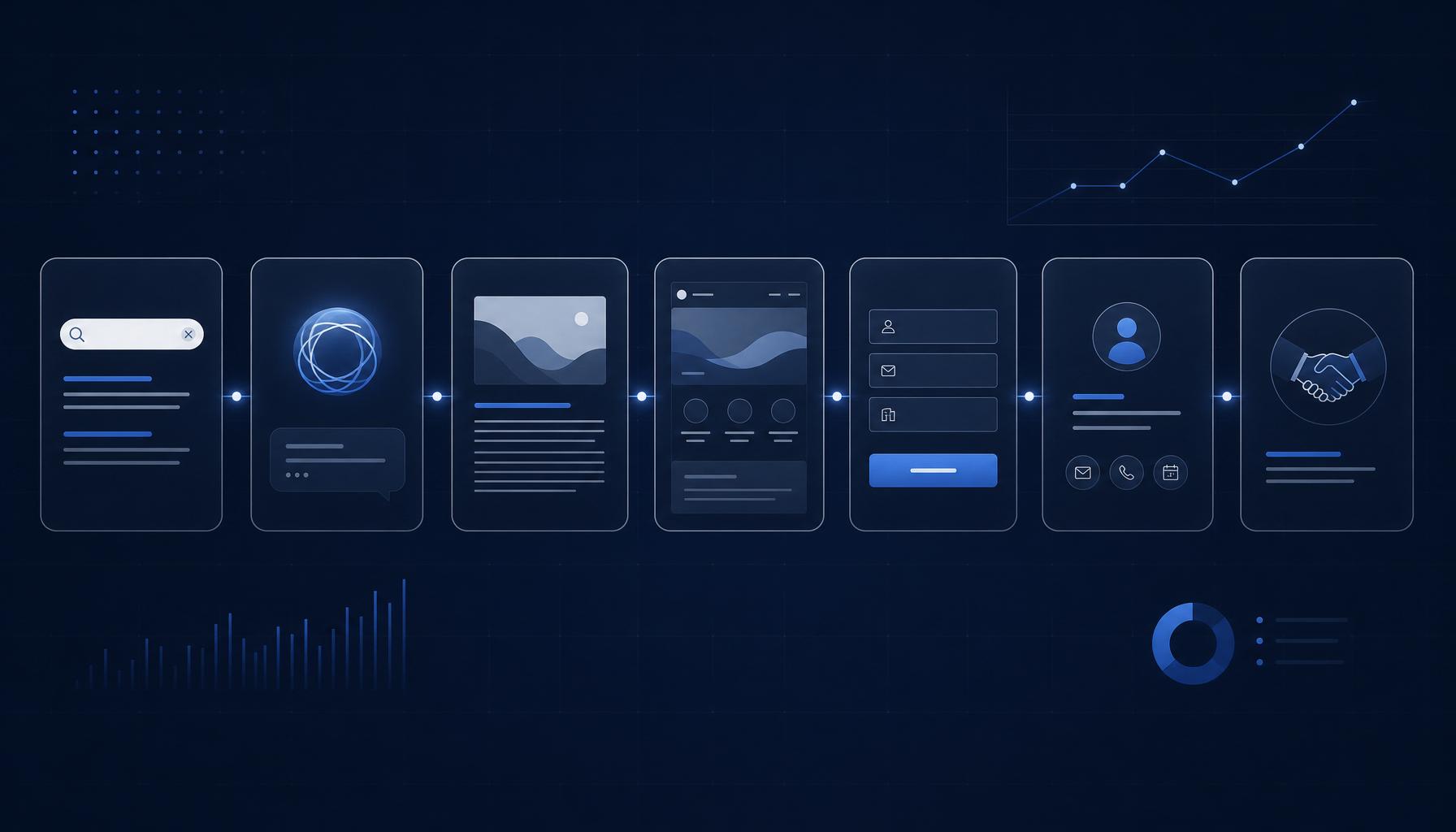
Inbound today is a multi-channel chain where every step reinforces the next. A single blog or a single Google Ads campaign is not enough — you need a system where organic search, AI search, paid media and content all lead to the same website and the same CRM.
SEO
The site ranks in Google's organic results for the queries that real buyers use.
AI Search
The company is mentioned in ChatGPT, Gemini and Perplexity responses as a credible source.
Google Ads
Paid search and remarketing accelerate the pipeline and gather data fast.
Expert content
Pillar articles, guides and field notes answer the real questions buyers ask.
Website
Clear service pages, landing pages and social proof guide the visitor toward becoming a lead.
Conversions
Forms, bookings and WhatsApp contacts are made as low-friction as possible.
CRM
Leads flow into a CRM where sales sees the context and the right timing.
Sales
The salesperson talks to a buyer who has already researched the solution and trusts the company.
The core building blocks of inbound marketing
In modern B2B inbound these areas are not separate projects — they are parts of one and the same machine.
SEO
The technical foundation, content and internal linking that make the site rank in Google for both commercial and informational queries.
AI Visibility (GEO)
Optimization for being mentioned in answers from ChatGPT, Gemini, Perplexity and Google AI Overviews.
Google Ads
Search ads, Performance Max and LinkedIn-grade targeting that bring fast demand and data alongside organic growth.
Content marketing
Pillar pages, guides and field notes that build expertise and drive both traffic and trust.
Landing pages
Dedicated pages for individual markets, campaigns and personas — not just one generic homepage.
Conversion optimization
Clear CTAs, shorter forms, social proof and A/B testing that turn traffic into leads.
Marketing automation
Lead scoring, nurturing and CRM integration that make sure no lead gets lost.
Email marketing
Newsletters and targeted sequences that keep the company top of mind during long evaluation cycles.
Inbound or outbound?
It is not an either/or question. The best B2B companies use both — but inbound is what builds long-term growth. Outbound is most effective once the foundation is already in place.
Benefits of inbound
- •Leads come on their own — close rates are clearly higher.
- •Cost per lead decreases over time.
- •Content and rankings keep producing results for years.
- •Builds brand and authority at the same time.
- •Works internationally with the same logic, across languages.
- •Inbound gets stronger in the AI era — AI search favors trustworthy sources.
Drawbacks of inbound
- •Results don't appear in a week — a typical window is 3–12 months.
- •Requires systematic work, not isolated tricks.
- •Needs real expertise behind the content.
- •You have to commit — half-finished inbound delivers no results.
- •Requires a technically sound website and working analytics.
Use outbound when you need fast contacts in a tightly defined segment — for example launching a new product or selling into small, well-defined markets. Start building inbound the moment your company aims for sustainable growth or expansion into more markets.
How does inbound generate leads in practice?
A real-world example: a B2B software company selling internationally. A decision-maker googles their problem ("how to reduce manual reporting in logistics") and lands on the company's pillar article that answers exactly this question.
Inside the article, links lead to the relevant service page and a practical case study. The same person returns a week later via Gemini, and on the third visit books a demo.
The same pipeline works in domestic B2B: a buyer asks ChatGPT for "the best B2B SEO consultant in Finland", sees the company's name, visits the site, reads the guide and fills in the form. This is not luck — it is engineered.
Well-built inbound produces three types of leads: direct form submissions, demo requests and "latent" leads who come in later through sales because the company is already a familiar name.
The most common inbound marketing mistakes
These mistakes appear in almost every project I take on. Avoiding them is usually more valuable than adding more new tactics.
- 01Inbound is understood as just blogging, without SEO, AI and conversion strategy.
- 02Content is produced randomly, without pillar structure or topical depth.
- 03Keywords are chosen using internal product terms, not the words buyers actually use.
- 04The website looks great but the conversion points (CTAs, forms, bookings) are weak.
- 05Google Ads and SEO live in separate silos — data and learning don't flow.
- 06AI visibility is not taken seriously, even though buyers already use ChatGPT and Gemini.
- 07Content is generic "intro material" that AI does not recognize as an expert source.
- 08There is no CRM and no marketing automation, so leads drown in email inboxes.
- 09Measurement only looks at traffic, not pipeline impact.
- 10The project is abandoned after 3–6 months, right before results would have appeared.
Field note
I no longer believe that inbound means just blogging. I have seen too many companies publish 50 articles without a single deal being closed.
The best results I have seen happen when SEO, AI visibility, Google Ads and expert content are built as one machine — not four separate projects. The same decision-maker then meets the company from three different directions inside a single week, and the barrier to reaching out collapses.
Inbound in B2B is ultimately about building trust — for Google, for AI and for a human reader. The companies investing in this now will be in a very different position in a couple of years than those who wait.
The Modern B2B Inbound Framework
I have summarized how modern inbound actually works for a B2B company into one simple framework. I use it as the starting point in every client project — it is built in pieces, but the goal is always this full chain.
Every step matters equally. If content is great but the site is slow, the pipeline leaks. If leads come in but sales doesn't react, the pipeline leaks. If sales works but CRM data is never analyzed, growth stalls. Modern inbound is a system, not a campaign.
Frequently asked questions
Book a strategy call
A 45-minute conversation where we go through your business goals, your current inbound situation and the concrete first steps toward a continuous lead flow. No pitch, no commitment.